Tim is teaching a seminar on unemployment benefits in less than two weeks called "Unemployment 101: Application, Process, and Appeals." The seminar will be held from noon - 1:00 p.m. on Friday, May 23, 2014 at Tim's office, 2140-4th Avenue, Anoka MN 55303. Here is the public event description: In this FREE seminar, we will go over the process of applying for unemployment benefits and appealing an unfavorable determination. ATTORNEYS: This seminar is approved for one standard CLE credit, Event Code 190769. Space is limited, so advance registration is required. Please call (763) 450-9494 to register. Thanks
3 Comments
I am often asked if a person can get unemployment benefits if they quit their job. The short answer is a definite maybe. Generally, it very difficult, but not impossible, to get unemployment benefits if you quit a job. If you quit a job, you are not eligible for unemployment benefits unless you had good reason to quit caused by the employer, even if you meet all of the other criteria for eligibility. A “good reason to quit caused by the employer” is defined as “a reason (a.) that is directly related to the employment and for which the employer is responsible; (b.) that is adverse to the worker; and (c.) that would compel an average, reasonable worker to quit and become unemployed rather than remaining in the employment.” Minn. Stat. § 268.095, subd. 3(a). So, if you quit, you are generally ineligible to receive unemployment benefits unless you had good reason to quit caused by the employer. What is a good reason to quit? “Good cause” is a reason that is “real, not imaginary, substantial not trifling, and reasonable, not whimsical; there must be some compulsion produced by extraneous and necessitous circumstances.” Ferguson v. Department of Employment Servs., 311 Minn. 34, 44, 247 N.W.2d 895, 900, n. 5 (1976). Haskins v. Choice Auto Rental, Inc., 558 N.W.2d 507, 511 (Minn. Ct. App. 1997), citation in original. You may not have "good reason" if you did not complain to the employer about the situation that would cause you to quit and give your employer a chance to correct the problem. Further, you might not have "good cause" if you do not report further problems to your employer after the employer promises that the problem will be corrected. Further, the standard for determining good cause is “the standard of reasonableness as applied to the average man or woman, and not to the supersensitive.” Id., citation omitted. In other words, whether you had good cause to quit is analyzed from the perspective of an average, reasonable worker in your position, not necessarily from your perspective. For example, if you do not like a co-worker's appearance, that by itself is not a good reason to quit your job. After all, an average, reasonable worker would probably put up with the co-worker's appearance to stay employed. However, if the co-worker harasses you and you have complained to your employer, who promised to correct the situation, and the harassment continued unabated, that may be good reason to quit. There are a lot of exceptions to the general rule that you are ineligible for unemployment benefits if you quit a job. Exceptions include:
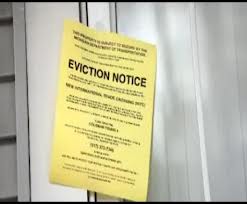
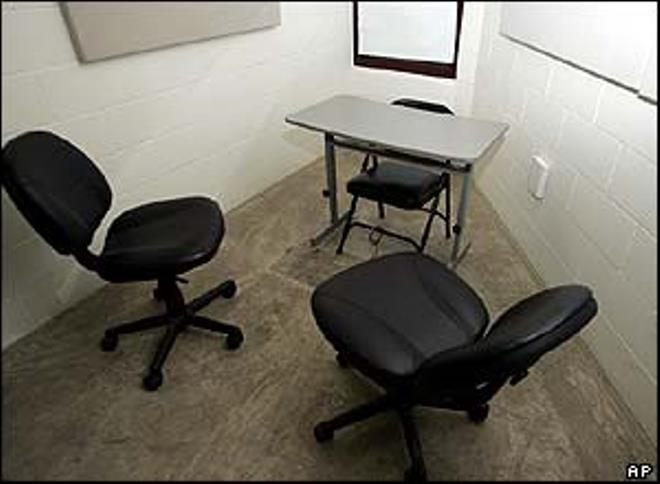
Minn. Stat. § 268.095, subd. 1, emphasis added. If you are denied unemployment benefits because you quit a job, your best bet is to meet with an attorney who handles unemployment appeals to see if you have a "good reason to quit caused by the employer" or if you qualify for an exception. To that end, I represent both applicants and employers in unemployment appeals. Please call (763) 450-9494 today to set up an appointment to discuss your situation. WARNING: The information contained in this blog post does not constitute legal advice and may not be applicable to your situation. Reading this blog post does not create an attorney-client relationship between you and Baland Law Office, P.L.L.C. Also, Tim is licensed only in state and federal courts in Minnesota. As such, any information provided in this blog post pertains only to those jurisdictions. Further, you should always discuss your situation with an attorney before taking any action based on what you may read in this blog. To that end, please call (763) 450-9494 to set up an appointment to discuss your situation. I'm often asked if a person needs an attorney to represent them in a law-related matter. As a general rule, you should consider hiring an attorney if you care about the outcome of your case. The longer answer is that it depends on what you are dealing with and the complexity involved. If you are dealing with a relatively straightforward matter that is uncontested where the parties agree on what should happen, you might be okay representing yourself, but you should understand the consequences of your actions before you make the decision to go it alone. If you decide to represent yourself, you will also be expected to know the applicable rules of court and held to the same standards as an attorney. There are few matters that you should handle on your own, without the advice and guidance provided by an attorney. In criminal matters, you should hire an attorney if you are charged with a misdemeanor, gross misdemeanor, or probation violation where the potential punishment includes time in jail or prison. In civil matters, you should hire an attorney to represent you in contested matters, where both sides disagree about the outcome, and especially if the other party or parties in your case have an attorney. In short, you should consider hiring an attorney when there is a lot on the line. I'll be the first to admit that I am biased here because I am an attorney and would like to have your business, if I am able to accept your case. Having an attorney on your side does not mean that you will automatically win, or that the attorney will see all of the complexities, nuances, and issues in your case. However, in my experience, most people who represent themselves will almost inevitably lose. You will always benefit from having an attorney represent you, because the attorney will not only see and understand the issues involved but also be able to advise you about options available to you and the potential consequences of each option. Hiring an attorney may cost more than you would like in the short term, but the long-term cost of not taking action now can be much greater. Baland Law Office, P.L.L.C. represents clients in both civil and criminal matters, and will meet with you to discuss your case and available options. The fee for such a meeting is $150, and most meetings last 30 - 45 minutes. Please call (763) 450-9494 to schedule an appointment to discuss your situation today! WARNING: The information contained in this blog post does not constitute legal advice and may not be applicable to your situation. Tim is licensed to practice law only in Minnesota, and the information contained in this blog post may not apply to jurisdictions outside of Minnesota. Further, reading this blog post does not create an attorney-client relationship between you and Baland Law Office, P.L.L.C. You should always discuss your situation with an attorney before taking any action based on what you may read in this blog. To that end, please call (763) 450-9494 to set up an appointment to discuss your situation. Can a landlord evict a tenant for illegal activities? For example, what can the landlord do if the tenant uses, sells, possesses, or manufactures illegal drugs in the rental unit? What if the tenant assaults someone, such as another tenant or guest, in the rental unit? Can the landlord evict a tenant who stores stolen property on the premises? The short answer is yes, the landlord can bring an eviction action, but only if there is proof that the tenant has engaged in certain illegal activities. In Minnesota, Minn. Stat. 504B.171, subd. 1 says that neither the landlord or tenant will: (i) unlawfully allow controlled substances in [the rental] premises or in the common area and curtilage of the premises; (ii) allow prostitution or prostitution-related activity as defined in section 617.80, subdivision 4, to occur on the premises or in the common area and curtilage of the premises; (iii) allow the unlawful use or possession of a firearm in violation of section 609.66, subdivision 1a, 609.67, or 624.713, on the premises or in the common area and curtilage of the premises; or (iv) allow stolen property or property obtained by robbery in those premises or in the common area and curtilage of the premises; and (2) the common area and curtilage of the premises will not be used by either the landlord or licensor or the tenant or licensee or others acting under the control of either to manufacture, sell, give away, barter, deliver, exchange, distribute, purchase, or possess a controlled substance in violation of any criminal provision of chapter 152. 0Minn. Stat. § 504B.171, subd. 1, emphasis added. In other words, the activities in bold print are prohibited, and grounds for eviction. Here is a short list of prohibited activities: 1. controlled substances 2. prostitution or prostitution-related activity 3. unlawful use or possession of a firearm 4. possession of stolen property These are the only illegal activities that are prohibited by statute, so a tenant cannot be evicted under this statute for engaging in an a crime not on this list. However, many leases and tenant rules prohibit other conduct. If a tenant's conduct violates the terms of the lease or rules, that violation is grounds for eviction as well. For example, if a lease prohibits "assaultive behavior," and the tenant assaults another tenant or guest, that might be grounds for eviction. I say might because the landlord must prove that the prohibited conduct occurred. In a civil action such as an eviction, the landlord must prove that prohibited conduct occurred by a preponderance of the evidence. That means that the landlord must prove that is more likely than not that the prohibited conduct occurred. What is sufficient proof? A conviction, either resulting from a guilty plea or trial, will almost certainly be sufficient because the underlying facts will either be admitted or proven beyond a reasonable doubt.. If a tenant is charged with a crime, that may be sufficient because a prosecutor found probable cause to believe that the tenant had committed a crime. Police reports and complaints for neighbors are good, but may not be sufficient to prove prohibited conduct in and of themselves. If a landlord suspects that a tenant is engaged in illegal activity, or receives complaints from neighbors, I would recommend calling the police and filing a police report. Landlords should encourage neighbors who complain about a tenant's behavior to call 9-1-1 instead of reporting the tenant to the landlord later, after the fact. If neighbors call the police immediately, the police may catch the tenant doing something illegal. Baland Law Office, P.L.L.C. represents both landlords and tenants in eviction actions, and in other litigation related to the landlord-tenant legal relationship. Please call (763) 450-9494 to schedule an appointment to discuss your situation today! WARNING: The information contained in this blog post does not constitute legal advice and may not be applicable to your situation. Tim is licensed to practice law only in Minnesota, and the information contained in this blog post may not apply to jurisdictions outside of Minnesota. Further, reading this blog post does not create an attorney-client relationship between you and Baland Law Office, P.L.L.C. You should always discuss your situation with an attorney before taking any action based on what you may read in this blog. To that end, please call (763) 450-9494 to set up an appointment to discuss your situation. If you're thinking about filing for bankruptcy, you're probably wondering if you can keep your house, car, or any other item that you are making payments on, such as a boat, ATV, computer, etc. The short answer is yes, but you have to get caught up (if you are behind) and keep making your regular payments on time and when due. If you are leasing (renting) property, you have to get caught up and keep making your payments. What I just said -- that you have to get caught up if you are behind and keep making regular payments -- applies to both Chapter 7 and Chapter 13 bankruptcy. This article applies mainly to Chapter 7 bankruptcy, and not Chapter 13. To learn more about your options for bankruptcy, please read my previous blog posts on the subject. Here is a link: http://www.balandlaw.com/3/category/bankruptcy/1.html. When you file for bankruptcy, the bankruptcy trustee (the person who is in charge of administering your bankruptcy) will take all of your property and sell it to pay your creditors, or the people you owe money to. There are three basic ways to keep your property out of the hands of the bankruptcy trustee: (1.) EXEMPT: Property that is exempt does not go to the bankruptcy trustee and does not become part of what is called your bankruptcy estate. Your bankruptcy estate is all of the property that is not exempt and available to the bankruptcy trustee to pay your creditors. The law provides that some property is automatically exempt,and does not become part of your bankruptcy estate. You can decide whether to use the exemptions provided by federal law or state law. For most people. federal exemptions are more appropriate, although there are good reasons to choose state exemptions. Regardless of whether you choose the state or federal exemptions, you get to keep the clothes on your back, your "household goods and furnishings" (like your furniture, radio, television, etc.) up to a certain value, and a car (again up to a certain value). These are only examples, and there are many more exemptions available. For a full list, see 11 U.S.C. 522 and Minn. Stat. 550.37. (2.) REAFFIRM: If you owe money and are making payments on a loan that is secured by an item of property, such as a car or house that the creditor (the person to whom you owe money), you can generally keep that property if it is exempt and you reaffirm the debt and agree to keep making your payments when they come due. This happens most often when you are making payments on a car loan or mortgage, and want to keep the car or house. So you reaffirm the debt, and promise to keep making payments on it in order to keep the property. To reaffirm a debt, you sign a document called a Reaffirmation Agreement that is usually prepared by the creditor. Every Reaffirmation Agreement must be approved by a judge, unless it involves real property. Approval is not automatic, and a judge does not have to sign off on a Reaffirmation Agreement. Sometimes, a judge does not approve a Reaffirmation Agreement, especially if you are trying to reaffirm a debt on something that is not practical, such as a boat, recreational vehicle, ATV (all-terrain vehicle). Usually, if a Reaffirmation Agreement is not approved, the judge thinks it makes more sense for you to give up the property than keep it and keep making payments. In such a case, I generally recommend contacting the creditor to see if the creditor will let you keep the property if you continue to make your payments. (3.) BUY BACK: As a bankruptcy attorney, I try to find as many exemptions as possible to keep your property out of the hands of the bankruptcy trustee. If, for whatever reason, a certain item of your property goes to the bankruptcy trustee, you can buy that property from the trustee and get the property back by paying the value of the property to the trustee. For example, if you have a nonexempt item of personal property that goes to the trustee, you can pay the value of that property to the trustee to get the property back. Baland Law Office, P.L.L.C. represents consumer debtors and small businesses in both Chapter 7 and Chapter 13 bankruptcy proceedings. Please call (763) 450-9494 to schedule an appointment to discuss your situation today and find out whether declaring bankruptcy is the right option for you! DISCLAIMER: Baland Law Office, P.L.L.C. is a debt-relief agency, and Timothy H. Baland, Esq. is a debt-relief agent. We help people like you to obtain bankruptcy relief. WARNING: The information contained in this article does not constitute legal advice and may not be applicable to your situation. Reading this blog post does not create an attorney-client relationship between you and Baland Law Office, P.L.L.C. This blog post may constitute attorney advertising. Further, Tim is licensed only in Minnesota state and federal courts, and the information that is provided here is applicable only to those jurisdictions. You should always discuss your situation with an attorney before taking any action based on what you may read in this blog. To that end, please call (763) 450-9494 to set up an appointment to discuss your situation. Sometimes, an employer will give you a choice between resigning and being fired. I don't envy anybody who has made the hard choice to resign or be fired. If you have made that choice, you may be wondering if you are eligible for unemployment benefits. Should you apply for unemployment benefits if you were forced to resign? The short answer is yes, but you should be prepared to appeal if (and when) your application is denied. For more information on unemployment appeals, see my earlier blog post on the subject. Here is a link to the article: http://www.balandlaw.com/3/category/unemployment/1.html The so-called "choice" to resign or be fired is really not much of a choice. I bet that most workers would prefer not to have a termination on their employment record, and who can blame them? However, this preference may make you ineligible for unemployment benefits. The general rule is that you are eligible for unemployment benefits if you were discharged, unless you were discharged for employment misconduct, which is a violation of the standards of behavior that an employer has the right to reasonably expect. Minn. Stat. 268.095, subd. 4. However, if you quit employment, you are not eligible for unemployment benefits unless you had good reason to quit caused by the employer. Minn. Stat. 268.095, subd. 1. Minn. Stat. 268.095, subd. 3 defines a "good reason to quit caused by the employer" as a reason: "(1) that is directly related to the employment and for which the employer is responsible; (2) that is adverse to the worker; and (3) that would compel an average, reasonable worker to quit and become unemployed rather than remaining in the employment." However, a "good reason to quit caused by the employer" does not exist if the reasons for the quit were caused by the employee's own employment misconduct. Id. The question is whether being forced to resign is a "good reason to quit caused by the employer." The answer is that it depends. The question of whether a termination is voluntary or involuntary is determined “not by the immediate cause or motive for the act but by whether the employee directly or indirectly exercised a free-will choice and control as to the performance or non-performance of the act.” Anson v. Fisher Amusement Corp., 254 Minn. 93, 98, 93 N.W.2d 815, 819 (1958); Wing-Piu Chan v. Pagoda, Inc., 342 N.W.2d 174, 175 (Minn.Ct.App.1984) In other words, if you freely and voluntarily quit your job, UIMN is unlikely to determine that you had "a good reason to quit caused by the employer." In determining whether a quit was voluntary, UIMN will look at the circumstances in which you quit. If you were forced to resign because you committed employment misconduct by violating a standard of behavior that your employer had the right to reasonably expect, then you probably did not have a "good reason to quit because "[w]hen an employee, in the face of allegations of misconduct, chooses to leave his employment rather than exercise his right to have the allegations determined, such action supports a finding that the employee voluntarily left his job without good cause." Ramirez v. Metro Waste Control Comm'n, 340 N.W.2d 355 (Minn.Ct.App.1983), On the other hand, if you were forced to resign for reasons other than employment misconduct, then you may have a "good reason to quit." The answer -- and outcome -- really depend on the facts of the situation. Your best bet is to meet with an attorney who handles unemployment appeals to see if you have a "good reason to quit caused by the employer." To that end, I represent both applicants and employers in unemployment appeals. Please call (763) 450-9494 today to set up an appointment to discuss your situation. WARNING: The information contained in this blog post does not constitute legal advice and may not be applicable to your situation. Reading this blog post does not create an attorney-client relationship between you and Baland Law Office, P.L.L.C. Also, Tim is licensed only in state and federal courts in Minnesota. As such, any information provided in this blog post pertains only to those jurisdictions. Further, you should always discuss your situation with an attorney before taking any action based on what you may read in this blog. To that end, please call (763) 290-0445 to set up an appointment to discuss your situation. The short answer is yes, a small business can file for bankruptcy protection in the same way that a person can. A small business can file either Chapter 7, Chapter 11, or Chapter 13 bankruptcy, depending on whether (1.) the business is an incorporated legal entity (such as a corporation or limited liability company) (2.) you want to continue operating the business after the bankruptcy (3.) you are personally liable for corporate debts; and (4.) the amount and nature of the business' debts. Chapter 7 erases most debt right away, but ends the business. In other words, the business ceases to exist as a legal entity, and all of its assets are sold and the proceeds distributed to creditors. Chapter 13 is not available to incorporated entities, but may be available to sole proprietors and qualifying partnerships. Chapter 13 puts you on a payment plan for a number of years. With both Chapter 7 and Chapter 13, the business has to stop operating when the bankruptcy is filed. Filing Chapter 11 allows a business to continue operating and restructure debt, but is usually too cost-prohibitive, time-intensive, and uncertain to be a viable option for small business. Because Chapter 7 and Chapter 13 are more realistic options for small business, I'm not going to go into further detail about Chapter 11. For more information on the different types of bankruptcy, please see my earlier article on bankruptcy in this blog. Business owners sometimes sign personal guarantees for business debt. This means that the business owner individually and personally promises to pay business debt in the event that the business does not. In such a case, the owner may wish to consider filing for bankruptcy as well because, if the business gets rid of the debt by filing for bankruptcy, the creditor will try to collect payment from the business owner. Baland Law Office, P.L.L.C. represents business debtors and business owners in both Chapter 7 and Chapter 13 bankruptcy proceedings. If I think Chapter 11 is a better option for you, I will refer you to an attorney who specializes in Chapter 11. Please call (763) 450-9494 to schedule an appointment to discuss your situation today and find out whether declaring bankruptcy is the right option for you! DISCLAIMER: Baland Law Office, P.L.L.C. is a debt-relief agency, and Timothy H. Baland, Esq. is a debt-relief agent. We help people like you to obtain bankruptcy relief. WARNING: The information contained in this article does not constitute legal advice and may not be applicable to your situation. Reading this blog post does not create an attorney-client relationship between you and Baland Law Office, P.L.L.C. Tim is licensed in Minnesota stat You should always discuss your situation with an attorney before taking any action based on what you may read in this blog. To that end, please call (763) 450-9494 to set up an appointment to discuss your situation. You may be asked to give a statement to an investigator for the police, for an insurance company, or for a government agency other than the police (usually a licensing or regulatory agency). If you've been asked to give a statement or come to an investigator's office, you're probably wondering what to do next. The short answer is that you should probably not give a statement because anything that you say can and will be used against you. I can’t emphasize enough that you should not give a statement or confess, even when the police or an investigator put a lot of pressure on you to do so. You should only ask to be able to talk to your attorney. Sometimes, the police will ask you to come to the police station or an investigator's office to be interviewed because you may have information about criminal or other illegal activity. If you are asked to come to the police station or an investigator's office, I would recommend that you contact an attorney to find out how you should respond because, if you consent to be interviewed, any information that you provide can be used against you. Sometimes, police or an investigator may want to talk to you because they think you have information on the target of their investigation. Even if you are not the target of an investigation, I would still recommend that you talk to an attorney before agreeing to be interviewed. You don't want to incriminate yourself accidentally, or say something inadvertent that turns you into the target of an investigation. Your best bet, whether you are the target of an investigation or not, is to consult with an attorney before agreeing to give a statement. I would also recommend having the attorney attend the interview to make sure that your rights are protected. If you have been called for an interview as part of an investigation, please call me at (763) 450-9494 to discuss your best strategy and available options. WARNING: The information contained in this article does not constitute legal advice and may not be applicable to your situation. Reading this blog post does not create an attorney-client relationship between you and Baland Law Office, P.L.L.C. You should always discuss your situation with an attorney before taking any action based on what you may read in this blog. To that end, please call (763) 450-9494 to set up an appointment to discuss your situation. If you are driving and pulled over by the police, you are probably wondering what to do. Nearly everybody who drives will be pulled over at some point. If you are pulled over, don't take it personally, and remain calm, rational, and businesslike. Here are some general pointers to follow if you are pulled over: DO have your necessary documents ready – valid driver’s license, insurance card & proof of registration, and get those documents out before the police officer approaches your vehicle. DON’T roll down your window only an inch to pass the documents – you will look unnecessarily suspicious. Roll your window down all the way. DO pull over as soon as you safely can – the officer will appreciate your prompt response. Pull over as far as you safely can, signal that you are pulling over, and turn your ignition off after you have pulled over and rolled down your window. DON’T give the officer permission to search anything – if they proceed without permission, stay calm and remember all of the details of the search (I recommend writing down what happened after the officer lets you go) to tell your attorney. DON"T give a statement to the officer – the officer will typically try get you to admit that you were speeding or had an equipment violation. Under no circumstances should you admit that you were breaking the law because such an admission could come back to haunt you. DO keep your hands in plain view – put them at 10 o’clock and 2 o’clock on the steering wheel. DON’T be a jerk – it’s not going to help your situation. Address the officer as "Officer" and be polite, businesslike, and respectful. Remember, the police officer is doing his or her job and has the power to issue you a ticket, give you a warning, and let you go. DO turn on your interior lights if it is at night – to prove you aren't trying to hide something. DON’T give the officer a reason to be worried or suspicious – stay calm and do what they say. DO carefully drive away and be mindful of all traffic laws – cautiously merge back into traffic, signaling accordingly. DON'T drive off until the officer gives you permission to leave and gets back in his/her car. DON’T get out of your car - unless asked by the officer to do so. DO thank the officer regardless of the outcome of the encounter, and ask the officer if you are free to leave. If you are given a ticket, you will have to decide whether you want to plead guilty by paying the fine, challenge the ticket, or take other action. Every situation is different, so it is impossible to cover every possible variation in an article. Please call me at (763) 450-9494 to set up an appointment to discuss your situation. WARNING: The information contained in this article does not constitute legal advice and may not be applicable to your situation. Reading this blog post does not create an attorney-client relationship between you and Baland Law Office, P.L.L.C. You should always discuss your situation with an attorney before taking any action based on what you may read in this blog. To that end, please call (763) 450-9494 to set up an appointment to discuss your situation. A valid contract requires an offer, acceptance of that offer, and consideration. In general, contracts primarily for services are governed by common law, while contracts primarily for goods are governed by the Uniform Commercial Code, or “U.C.C.” for short. An offer is a demonstration of willingness to enter into a contract, while an acceptance is a demonstration of agreement to the exact conditions in the offer. In other words, the parties must express mutual assent to the terms of the contract. The simplest example of a contract is when you order something -- say, a hamburger -- from the menu at a restaurant. The items listed on the menu with their prices are the offer and when you order the item, you are accepting the offer and promising to pay. After an offer is accepted, the parties have an enforceable contract if there was appropriate consideration, which is something of value. The individual making the offer must gain a benefit from the contract, and the individual accepting the offer must sustain a loss or detriment of some sort. In the example above, you get a hamburger, and the restaurant receives the money that you pay for that hamburger. When analyzing the validity of a contract, I first see whether there was an offer and acceptance, or whether the parties agreed to the same thing. If so, I ask whether the contract is supported by adequate consideration. Enforcing a contract is always difficult. If you have a contract with somebody and that person or business is not doing what they promised to do (in other words, breaching the contract), you always have several options. The best course of action is always different depending on your particular situation, what the contract is for, and who is the breaching party. The law governing contracts is incredibly complex, and I always recommend that you consult with a licensed attorney if you have a contract issue. Baland Law Office, P.L.L.C. represents both individuals and small businesses in all aspects of contracts, from drafting and formation to enforcement and litigation.. Please call (763) 450-9494 to schedule an appointment to discuss your situation today! WARNING: The information contained in this article does not constitute legal advice and may not be applicable to your situation. Reading this blog post does not create an attorney-client relationship between you and Baland Law Office, P.L.L.C. You should always discuss your situation with an attorney before taking any action based on what you may read in this blog. To that end, please call (763) 450-9494 to set up an appointment to discuss your situation. |
AuthorTimothy H. Baland, Esq. Categories
All
|


RSS Feed