
Space is limited, so advance registration is required. Here is the link to register:
https://zoom.us/meeting/register/vJwpdu2urz8tKv6EEdbMSa-0Pw-Fwk1nvg
Thanks!

Call me at (763) 290-0445 to discuss your case now. The fee for an in-depth 30-minute consultation is $250. The fee may be reduced or waived for certain cases. I am only licensed in the state and federal courts in Minnesota, and can only advise you on the laws of that state. Call now!
| Baland Law Office, P.L.L.C., (763) 290-0445 |
|
|
Yesterday, Governor Walz issued an executive order suspending evictions. How can landlords comply with that executive order? I am hosting a roundtable discussion for landlords on complying with that executive order tomorrow, March 25, 2020 at 4 PM.
Space is limited, so advance registration is required. Here is the link to register: https://zoom.us/meeting/register/vJwpdu2urz8tKv6EEdbMSa-0Pw-Fwk1nvg Thanks!
3 Comments
UPDATE: GOVERNOR WALZ OF MINNESOTA ANNOUNCES MORATORIUM ON EVICTIONS
By executive order, Governor Walz announced a moratorium of evictions. Landlords cannot bring an eviction while the Covid 19 pandemic is going on. Here is the text from the press release: Providing housing stability for Minnesota families at a time of financial uncertainty, Governor Walz signed Executive Order 20-14 to suspend eviction proceedings during the COVID-19 peacetime emergency. Loss of housing is catastrophic at any time, and during the COVID-19 pandemic, this loss endangers the health and well-being of all Minnesotans. While this order clarifies that tenants who can continue to pay rent during the peacetime emergency should continue to do so, landlords and financial institutions cannot begin eviction proceedings that would remove tenants from stable housing. I have not seen or read the actual order, so I don't know if there are any exceptions for public safety where a tenant is presenting a danger to themselves or to other persons, but – for now – there is a moratorium on new evictions for the duration of the pandemic. IMPORTANT UPDATE: I have now read the order, and it makes an exception for evictions brought because a tenant is seriously endangering the safety of other residents for violations of 504B.171, subd. 1. In addition, landlords are prohibited from terminating a residential lease as long as the peacetime emergency lasts. Further, if a County Sheriff holds a Writ of Recovery, the deputy is prohibited from enforcing it unless it is a priority Writ. A Writ is considered "priority" if it is "based on an eviction action under section 504B.171, or on the basis that the defendant is causing a nuisance or seriously endangers the safety of other residents, their property, or the plaintiff's property." Every landlord – tenant situation is unique, and I recommend that landlords talk to an attorney experienced in evictions and landlord tenant law before taking action based on this blog post. To that end, I invite landlords to give me a call at 763-290-0445 to discuss their unique situation. The first thing I will ask you is what you want to have happen because, ultimately, the landlord is in control. I have represented many landlords, but do not represent residential tenants. WARNING: The information contained in this blog post does not constitute legal advice and may not be applicable to your situation. Tim is licensed to practice law only in Minnesota, and the information contained in this blog post may not apply to jurisdictions outside of Minnesota. Further, reading this blog post does not create an attorney-client relationship between you and Baland Law Office, P.L.L.C. You should always discuss your situation with an attorney before taking any action based on what you may read in this blog. To that end, please call (763) 290-0445 to set up an appointment to discuss your situation. I bet that a lot of landlords are asking right now if they can bring an eviction against a tenant during the Covid 19 pandemic? The short answer is yes, with several restrictions. I wrote a blog post a couple of days ago on whether a landlord should bring such an eviction. Here is a link:
https://balandlaw.com/blog/what-should-a-landlord-do-if-a-tenant-says-they-cannot-pay-the-rent-because-of-coronavirus Many landlords and tenants have probably heard of a moratorium on foreclosures and evictions ordered by President Trump. However, President trumps authority extends only to mortgages and leases that are backed by a federal agency. In other words, if a tenant receives Section 8 assistance through the Department of Housing and Urban Development, it is questionable in my mind whether that tenant can be evicted. Likewise, if a mortgage is backed by a federal agency, I do not think that mortgage can be foreclosed. Landlords in Minnesota have two primary concerns. I will discuss each concern in more detail. 1. Bill: There is a bill circulating in the legislature that would impose a moratorium on evictions for 30 days, and gives the governor the authority to extend that moratorium for an additional 60 days. As of the date of this writing, that bill does not become law – yet. However, I expect that if the bill when is on the governor's desk it will become law, especially in the present crisis that we find ourselves in. 2. Courts: on March 23, 2020, the Minnesota Supreme Court issued an order that specifically addresses evictions. Basically, the order does not impose an additional moratorium on evictions, but does say that you are entitled to an in court room hearing (although parties and attorneys may appear remotely) if your complaint shows "individual or public health and safety at risk. The order goes on to say that "in all other housing/eviction matters, the presiding judge is authorized to conduct the proceeding remotely or based on the parties written submissions." So, there is not a specific moratorium on the filing evictions, at least of the date of this writing. I filed an eviction earlier this week and was told that it would not be scheduled for a hearing until at least March 27, 2020. As such, I would expect the hearing to be in mid April. However, if the bill that was discussed previously lands on the governor's desk, the governor will sign it – and impose a moratorium on evictions. In the meantime, landlords are not specifically prohibited from filing evictions, although evictions that implicate a public safety concern will have priority, and I would not expect that the hearing for any eviction would be scheduled before the end of the month. No one wants to evict a tenant in the midst of a pandemic. As such, I would encourage landlords to reach out to tenants and informed tenants of the resources that might be available to help them pay the rent. There are many such resources, but here is a good starting point, at least for tenants in Anoka County: https://www.anokacounty.us/3474/I-am Landlords are not entirely without resources as well. Here is a good place to start, at least in Anoka County: https://www.anokacountysuccess.org/covid-19-anoka-county-business-resources/ In addition, landlords may want to see if they are eligible for a low interest loan from the Small Business Administration. Every landlord – tenant situation is unique, and I recommend that landlords talk to an attorney experienced in evictions and landlord tenant law before taking action based on this blog post. To that end, I invite landlords to give me a call at 763-290-0445 to discuss their unique situation. The first thing I will ask you is what you want to have happen because, ultimately, the landlord is in control. I have represented many landlords, but do not represent residential tenants. WARNING: The information contained in this blog post does not constitute legal advice and may not be applicable to your situation. Tim is licensed to practice law only in Minnesota, and the information contained in this blog post may not apply to jurisdictions outside of Minnesota. Further, reading this blog post does not create an attorney-client relationship between you and Baland Law Office, P.L.L.C. You should always discuss your situation with an attorney before taking any action based on what you may read in this blog. To that end, please call (763) 290-0445 to set up an appointment to discuss your situation. Many attorneys and law firms are wondering how they can best serve their clients during the COVID 19 pandemic. The answer, I think, lies in not having to be in a particular place in order to work, and making full use of Internet and cloud-based resources. I take comfort in the fact that I know I can work from anywhere. For example, last year, my family and I were on vacation in London, but I was still able to respond to client communications, even when I was across the ocean, and on another continent.
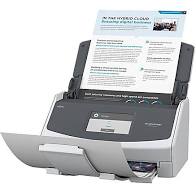
Every piece of paper that comes into my office gets scanned – and then shredded. Clients get the original documents. I make every effort to run a less paper law office, and only have a paper file when I go to court – although that is changing. I can envision a time when I will go to court with a tablet, and access pleadings and other documents using that device. I think that communication is key, especially during times of uncertainty. As a general rule, clients like certainty, and the like to know that you are in control. That is why – if you have not already – I would recommend sending your clients a communication (by way of email, client portal, or however you do it) to let them know that you have a planned and what your plan is for operating – and serving client needs – during the pandemic. Communication is important for attorneys and support staff as well. Many attorneys, paralegals, and support staff are working remotely, probably from home, these days. The question is how to maintain productivity when you and your staff are working remotely. The important thing is to set realistic expectations. Working from home is not an excuse to be lazy, to not be productive, or to go on vacation. Rather, you need to expect that you and your staff will be productive – and get approximately the same amount of work done as you did in the office. WARNING: The information contained in this blog post does not constitute legal advice and may not be applicable to your situation. Tim is licensed to practice law only in Minnesota, and the information contained in this blog post may not apply to jurisdictions outside of Minnesota. Further, reading this blog post does not create an attorney-client relationship between you and Baland Law Office, P.L.L.C. You should always discuss your situation with an attorney before taking any action based on what you may read in this blog. To that end, please call (763) 290-0445 to set up an appointment to discuss your situation. DISCLAIMER: The opinions contained in this blog post are just that – opinions – and are my own personal opinion. They do not represent the view of the Minnesota State Bar Association or any other section or group that I am affiliated with. What Should a Landlord Do If a Tenant Says They Cannot Pay the Rent Because of Coronovirus?3/17/2020 In the coming days and weeks, I suspect that a lot of landlords will be asking the question: "What should I do if my tenant says that they cannot pay the rent due to coronavirus?" Most tenants have probably paid rent for March by now, but April – and then May – are looming on the horizon.
Governments have already closed many public establishments in an effort to contain the coronavirus. I bet that a lot of workers will be furloughed and perhaps laid off if these containment measures continue for a long time. If workers lose income, they will have difficulty paying the rent. This will put landlords in a difficult quandary. After all, the tenant signs an agreement to pay a certain amount of rent per month in exchange for a place to live. If the tenant reaches that contract, then the tenant should expect to be evicted. The question is what the landlord can and should do. The landlord can reach out to the tenant and offer a flexible payment plan, such as splitting the rent into two monthly payments in order to make it more manageable. If the landlord knows of resources that the tenant might be able to use to get the rent paid, then the landlord should point goes out to the tenant. However, the burden is on the tenant here. If the tenant anticipates having difficulty in paying the rent, then I think the tenant needs to be the person to reach out. The burden is not on the landlord. I think that the tenant should: 1.stay in communication with the landlord, and let the landlord know if they are going to have a problem paying the rent; 2. in touch with the county social services agency to see if they can get assistance; and 3. Contact church groups or other such humanitarian organizations to see if they can provide any help. For their part, I think that landlords should be sympathetic if a tenant is not able to pay the rent because of coronavirus. However, tenants need to understand that the landlord is not running a charity – and still has to pay the mortgage. Rather, the landlord is running a business. Tenants need to make every effort to get the rent paid – or they will face eviction, coronavirus or no. Every landlord – tenant situation is unique, and I recommend that landlords talk to an attorney experienced in evictions and landlord tenant law before taking action based on this blog post. To that end, I invite landlords to give me a call at 763-290-0445 to discuss their unique situation. The first thing I will ask you is what you want to have happen because, ultimately, the landlord is in control. I have represented many landlords, but do not represent residential tenants. WARNING: The information contained in this blog post does not constitute legal advice and may not be applicable to your situation. Tim is licensed to practice law only in Minnesota, and the information contained in this blog post may not apply to jurisdictions outside of Minnesota. Further, reading this blog post does not create an attorney-client relationship between you and Baland Law Office, P.L.L.C. You should always discuss your situation with an attorney before taking any action based on what you may read in this blog. To that end, please call (763) 290-0445 to set up an appointment to discuss your situation. If you are anything like me, you are probably wondering how you are going to financially weather the COVID 19 storm. Depending on the length and severity of the shutdown, both individuals and businesses will be affected. Individuals will be furloughed or outright lose their jobs, and businesses will lose income.
COVID-19 is upending lives, destroying businesses, and making life more difficult for all of us, the important thing to remember is that we are all in this together. The pandemic will affect us all, some more than others, and some will have to – or be forced to – declare bankruptcy in order to survive. Declaring bankruptcy does not mean that you are giving up. Rather, you are taking a positive step to end your debt. Bankruptcy is not surrendering to your creditors; it is really using the law to give you a fresh start. Filing for bankruptcy will put a stop to collection calls, collection letters, and – if your bank accounts, wages, or other property were garnished or levied within 90 days of the date that you file – may mean that you either get money or property back. Individual persons can file for either chapter 7 or Chapter 13 bankruptcy. Individuals who make their living from farming or fishing have a few different options as well. Small businesses are limited to filing for Chapter 7, although businesses can also file for chapter 11 if the business is going to continue after filing – but chapter 11 is far beyond the scope of this blog post. Nevertheless, I will be happy to refer you to a colleague who can help you determine if chapter 11 is right for you. Personally, I like chapter 7 better because it wipes all of your debts out at once and is a lot faster than chapter 13. However, your net income (your gross income after payroll deductions and expenses) has to be below a certain level for your family size in order for you to qualify for Chapter 7 bankruptcy. I prefer to file for Chapter 7 bankruptcy on behalf of the debtor, unless there is a good reason for choosing chapter 13 bankruptcy. A good reason for choosing chapter 13 would be if the debtor makes too much money to qualify for Chapter 7, or if the debtor has a lot of equity in a house. Your bankruptcy attorney will be able to explain to you the differences between chapter 7 and Chapter 13, and which one is a better option for you. Baland Law Office, P.L.L.C. represents consumer and small business debtors in both Chapter 7 and Chapter 13 bankruptcy proceedings. Please note that only individual debtors can file for Chapter 13 bankruptcy relief, but not businesses. Please call (763) 290-0445 to schedule an appointment to discuss your situation today and find out whether declaring bankruptcy is the right option for you! DISCLAIMER: Baland Law Office, P.L.L.C. is a debt-relief agency, and Timothy H. Baland, Esq. is a debt-relief agent. We help people like you to obtain bankruptcy relief. WARNING: The information contained in this article does not constitute legal advice and may not be applicable to your situation. Reading this blog post does not create an attorney-client relationship between you and Baland Law Office, P.L.L.C. You should always discuss your situation with an attorney before taking any action based on what you may read in this blog. To that end, please call (763) 290-0445 to set up an appointment to discuss your situation. If you have a court case scheduled in the next few weeks, you are probably wondering how the coronavirus pandemic is going to affect your hearing. The short answer is that it depends on whether you have a hearing in state court or federal court. Here is what we know so far: The Minnesota Supreme Court issued an order about court operations during the coronavirus pandemic. You can read the order for yourselves, but it basically says that trials already in progress where a jury is already empaneled will continue until conclusion. However, no new jury trials – for cases not classified as super high priority or high priority – will be scheduled for the next 30 days. The state courts have classified cases into four different priority levels: super high priority, high priority, medium priority, and low priority. Super high priority and high priority cases are those that implicate a liberty interest , a public safety interest, or the protection of a constitutional right. Here is the summary of the temporary procedures in place for processing cases from the court website: All court facilities shall remain open. Service windows at court facilities will also remain open, and courts will continue to accept filings in all case types. The Judicial Branch discourages the public from making any non-essential visits to court facilities.
If your case is classified as medium or low priority, you can almost count on having your hearing rescheduled. As of today's date, I have had to medium priority hearings canceled, and there is an advisory on the court website to call the courthouse where your hearing is to see if your hearing has been canceled or rescheduled. That is a good idea, and probably the best advice: if you have a hearing coming up in the next few weeks, you should call the courthouse to see if your hearing is still on. You can download the actual documents here:
However, that order applies to state courts, and the federal judiciary is covered by a different system. I recommend that you check the federal district court website at https://www.mnd.uscourts.gov/ or the bankruptcy court website at https://www.mnb.uscourts.gov/ for more information during this time.
UPDATE 3/19/2020: I spoke with the the court administrator in Dakota County, and found out that hearings classified as medium or low priority will be scheduled for a hearing at the end of the month, if the Minnesota Supreme Court does not extend the moratorium. Depending on the kind of case you have, I expect that your hearing will be scheduled in mid April at the earliest. However, that said, you are better off filing a case that has medium or low priority now, so that your hearing will be scheduled sooner. In other words, by filing now, you ensure that your case will be one of the first one scheduled, and not at the end of the line – at least as far as scheduling goes. WARNING: The information contained in this blog post does not constitute legal advice and may not be applicable to your situation. Tim is licensed to practice law only in Minnesota, and the information contained in this blog post may not apply to jurisdictions outside of Minnesota. Further, reading this blog post does not create an attorney-client relationship between you and Baland Law Office, P.L.L.C. You should always discuss your situation with an attorney before taking any action based on what you may read in this blog. To that end, please call (763) 290-0445 to set up an appointment to discuss your situation. I often asked whether a Christian landlord can evict a tenant. While I am not going to try to define what it means to be a Christian (because there are plenty of people who do that). For me, it comes down to a simple rule: namely, treat others with courtesy and respect, and how you would like to be treated yourself. Maybe that is not Christian, but it is human.
It is important to remember that being a landlord, whether you are a Christian or no, means operating a business. You are in the business of providing housing to tenants. You might be in that business because you are or consider yourself to be a Christian. If a tenant fails to pay rent, violates the lease, or otherwise does not uphold their end of the bargain, then you should bring an eviction action. The first question for a landlord to ask (one of the first questions that I ask any prospective client) is what the landlord wants to have happen. Does the landlord simply want the tenant to pay up, or does the landlord want the tenant to leave? There are probably three reasons that a landlord would consider bringing an eviction: failure to pay rent, lease violations, or a combination of the two. Sometimes, a failure to pay rent is caused by drug use. If the tenant is not paying the rent, then before bringing an eviction, the landlord should reach out to the tenant by telephone, email, text, or however the landlord and tenant communicate, and ask – point-blank – why the tenant is not paying the rent. Tenants can have very good reasons for not paying the rent. Maybe they lost a job, got sick, had to care for a relative, or something else – but they cannot get away from the fact that the signed a contract to pay rent, usually on a monthly basis. If they do not pay the rent, and they are in violation of that contract – and you, as the landlord, cannot afford to have a tenant who does not pay the rent. Sometimes a tenant can present a truly sympathetic situation, and simply need a little extra time to pay the rent. However, in that case, the landlord has to make a judgment call: namely, is it a sound business decision for the landlord to give the tenant a little extra time to pay? I once evicted a tenant who is confined to a wheelchair. He presented a very sympathetic situation, but was not a very sympathetic character. However, if a tenant is violating the lease or the law, then I would not hesitate to bring an eviction. For example, the tenant might be illegally subletting their unit, damaging the landlord's property, using drugs on the premises, etc. In that case, I do not think I would bother reaching out to the tenant. Rather, I would just bring an eviction action against that tenant. Every landlord – tenant situation is unique, and I recommend that landlords talk to an attorney experienced in evictions and landlord tenant law before taking action based on this blog post. To that end, I invite landlords to give me a call at 763-290-0445 to discuss their unique situation. The first thing I will ask you is what you want to have happen because, ultimately, the landlord is in control. I have represented many landlords, but do not represent residential tenants. WARNING: The information contained in this blog post does not constitute legal advice and may not be applicable to your situation. Tim is licensed to practice law only in Minnesota, and the information contained in this blog post may not apply to jurisdictions outside of Minnesota. Further, reading this blog post does not create an attorney-client relationship between you and Baland Law Office, P.L.L.C. You should always discuss your situation with an attorney before taking any action based on what you may read in this blog. To that end, please call (763) 290-0445 to set up an appointment to discuss your situation. I am often asked whether a landlord should hold off on evicting a tenant until after the holidays. The short answer is no, the landlord should bring an eviction as soon as possible. A landlord will do well to remember that being a landlord is a business. The landlord is in the business of providing housing, and those persons who do not pay their monthly rent should leave, and be replaced with tenants who actually pay their rent on time. A tenant always has to meet their obligations under the lease to pay rent, even if there is a holiday. The landlord is under no obligation to give the tenant a gift of free rent for a month or two. Indeed, a tenant might get use to not paying rent, and then expect to stay for free. A tenant who does not pay rent is not meeting their obligation under the lease, and should be evicted. Still, I understand that certain landlords would prefer not to bring an eviction so close to the holidays. However, if the landlord files an eviction now, the hearing will not take place until 2 – 3 weeks. As such, I would recommend that a landlord bring an eviction sooner rather than later, even if we are in the midst of a holiday season. Every landlord – tenant situation is unique, and I recommend that landlords talk to an attorney experienced in evictions and landlord tenant law before taking action based on this blog post. To that end, I invite landlords to give me a call at 763-290-0445 to discuss their unique situation. The first thing I will ask you is what you want to have happen because, ultimately, the landlord is in control. I have represented many landlords, but do not represent residential tenants. WARNING: The information contained in this blog post does not constitute legal advice and may not be applicable to your situation. Tim is licensed to practice law only in Minnesota, and the information contained in this blog post may not apply to jurisdictions outside of Minnesota. Further, reading this blog post does not create an attorney-client relationship between you and Baland Law Office, P.L.L.C. You should always discuss your situation with an attorney before taking any action based on what you may read in this blog. To that end, please call (763) 290-0445 to set up an appointment to discuss your situation. I am often asked when is the right time to file for bankruptcy. The short answer is that the right time to file is probably now, with some important exceptions. For example, you might not want to file immediately if you recently made a large payment to an unsecured creditor or made a major purchase that you do not routinely make. Still, for most people, the right time to file for bankruptcy is now.
Declaring bankruptcy does not mean that you are giving up. Rather, you are taking a positive step to end your debt. Bankruptcy is not surrendering to your creditors; it is really using the law to give you a fresh start. If you are tired of getting collection letters collection calls, have been sued, or have a judgment against you, now is the right time to file. Filing for bankruptcy will put a stop to collection calls, collection letters, and – if your bank accounts, wages, or other property were garnished or levied within 90 days of the date that you file – may mean that you either get money or property back. Individual persons can file for either chapter 7 or Chapter 13 bankruptcy. Individuals who make their living from farming or fishing have a few different options as well. Small businesses are limited to filing for Chapter 7, although businesses can also file for chapter 11 – but chapter 11 is far beyond the scope of this blog post. Personally, I like chapter 7 better because it wipes all of your debts out at once and is a lot faster than chapter 13. However, your net income (your gross income after payroll deductions and expenses) has to be below a certain level for your family size in order for you to qualify for Chapter 7 bankruptcy. I prefer to file for Chapter 7 bankruptcy on behalf of the debtor, unless there is a good reason for choosing chapter 13 bankruptcy. A good reason for choosing chapter 13 would be if the debtor makes too much money to qualify for Chapter 7, or if the debtor has a lot of equity in a house. Your bankruptcy attorney will be able to explain to you the differences between chapter 7 and Chapter 13, and which one is a better option for you. Baland Law Office, P.L.L.C. represents consumer and small business debtors in both Chapter 7 and Chapter 13 bankruptcy proceedings. Please note that only individual debtors can file for Chapter 13 bankruptcy relief, but not businesses. Please call (763) 290-0445 to schedule an appointment to discuss your situation today and find out whether declaring bankruptcy is the right option for you! DISCLAIMER: Baland Law Office, P.L.L.C. is a debt-relief agency, and Timothy H. Baland, Esq. is a debt-relief agent. We help people like you to obtain bankruptcy relief. WARNING: The information contained in this article does not constitute legal advice and may not be applicable to your situation. Reading this blog post does not create an attorney-client relationship between you and Baland Law Office, P.L.L.C. You should always discuss your situation with an attorney before taking any action based on what you may read in this blog. To that end, please call (763) 290-0445 to set up an appointment to discuss your situation. |
AuthorTimothy H. Baland, Esq. Categories
All
|
||||||||||||||